
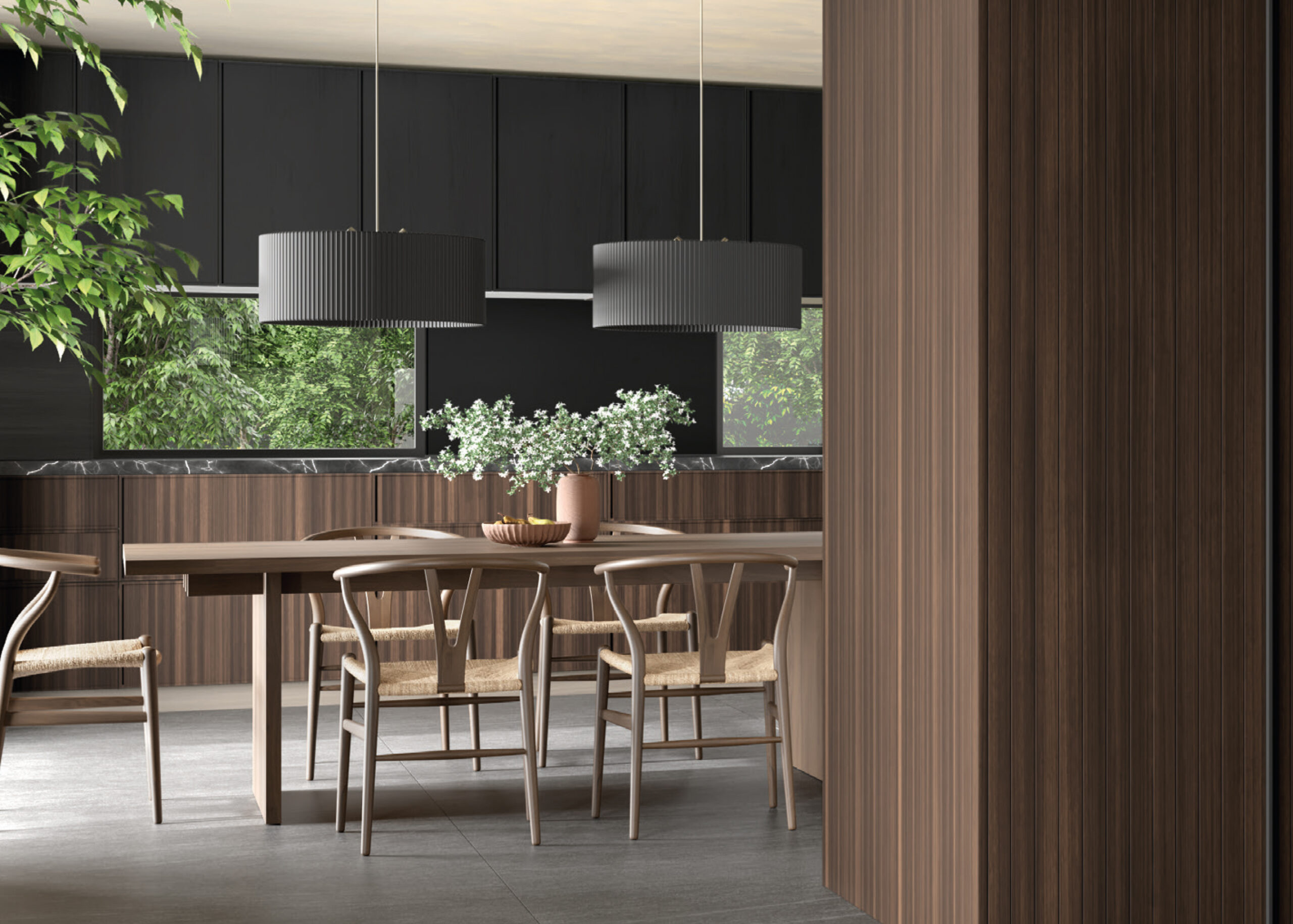
Roshe´s Kitchen
WHAT EXACTLY IS A JAPANDI KITCHEN?
The Japandi style was born from the fusion of two design traditions that, although rooted in very different cultures, share the same philosophy: the pursuit of beauty through simplicity.
On one hand, we have the Nordic kitchen, characterized by its functionality, brightness, and connection to nature. On the other, there is Japanese aesthetics, which bring a sense of calm, balance, and a more mindful approach to the home.
The result? A minimalist kitchen that removes the unnecessary and focuses on what truly matters: authentic materials, organized spaces, and thoughtful solutions designed to make everyday life easier.
Por eso, más que una tendencia pasajera, el japandi se ha convertido en una forma de entender el hogar.
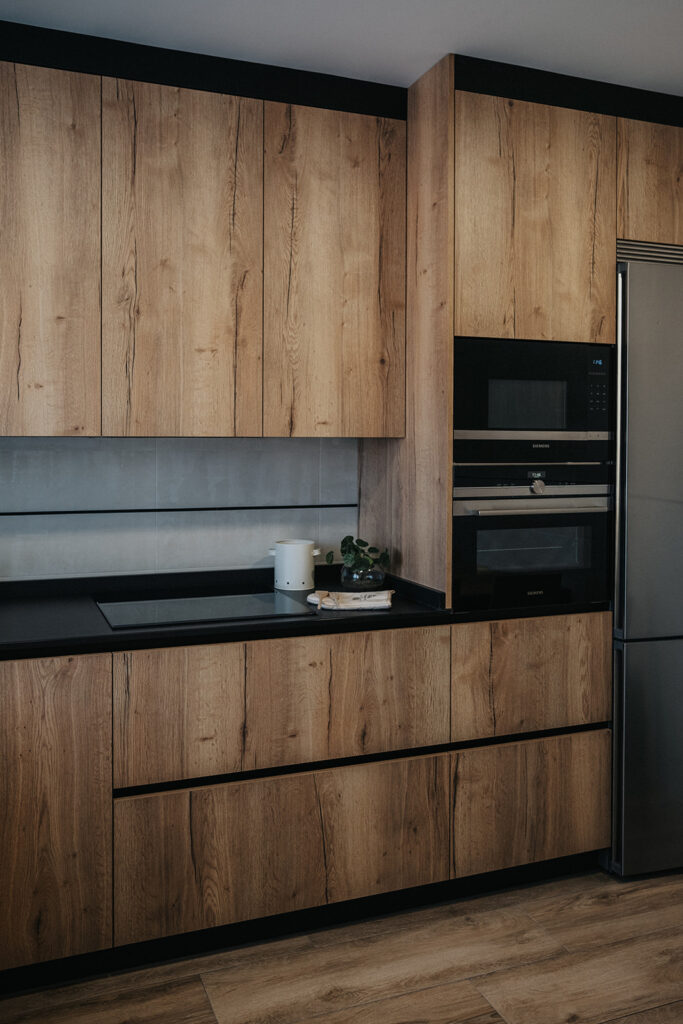
Roshe´s Kitchen
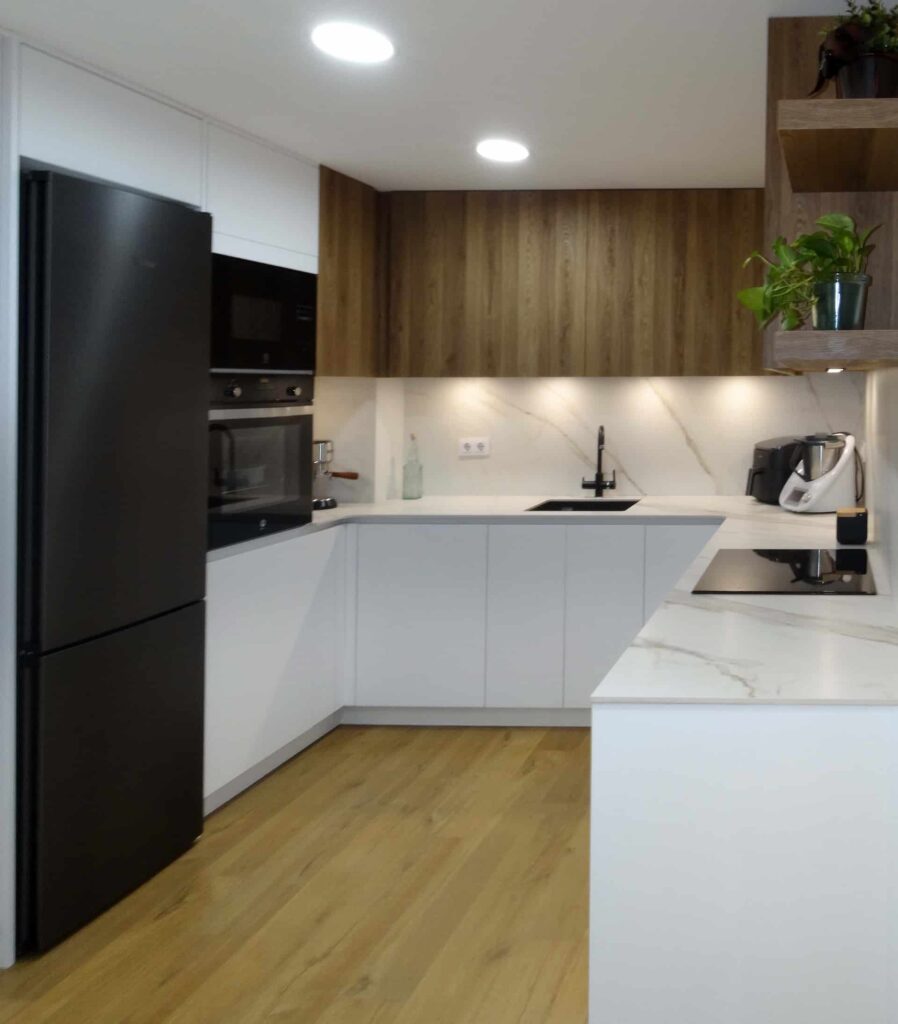
180 Grados´s kitchen
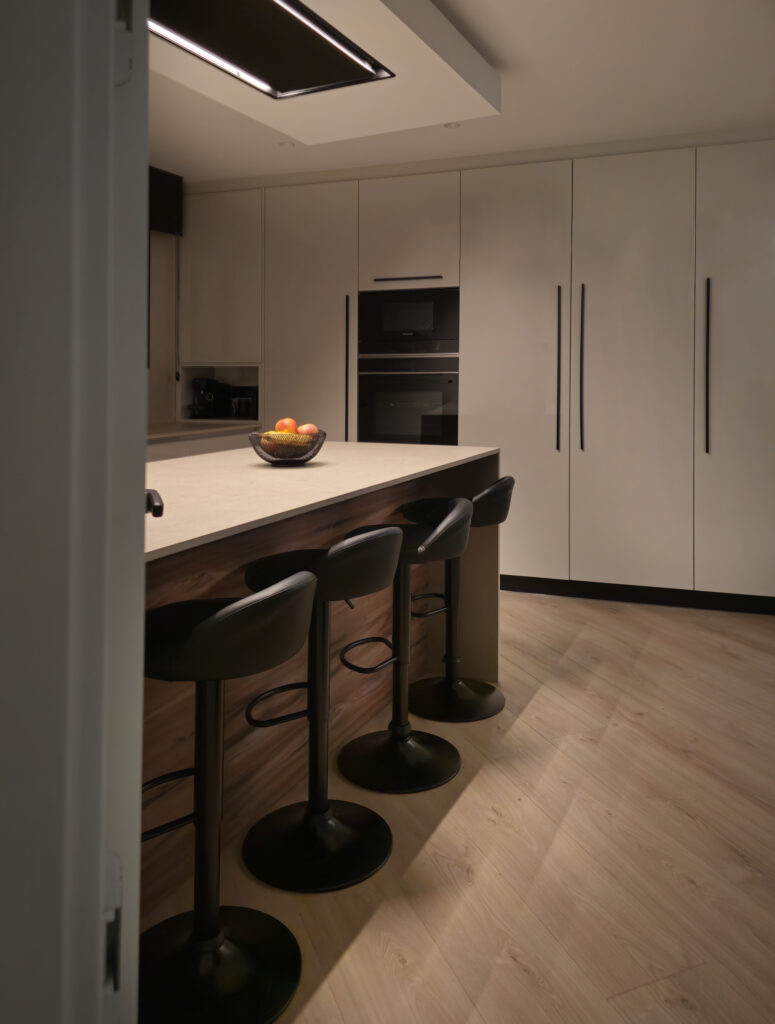
180 Grados´s kitchen
THE 6 AESTHETIC PILLARS OF THE JAPANDI STYLE
Although every project is unique, there are certain common elements that define this style. In particular, there are 6 key pillars that are essential to a Japandi kitchen:
1. The predominance of natural materials and honest finishes.
2. Open, uncluttered spaces with a light visual appearance.
3. Integrated storage solutions that promote organization and keep the space clutter-free.
4. Clean lines and simple forms.
5. A strong connection to natural light.
6. Soft and balanced color palettes.
Unlike other, more decorative kitchen styles, Japandi embraces restraint: every element has a function and a purpose within the overall design.
This is precisely why it is so easy to live with: it conveys a sense of calm, enhances the feeling of order, and creates timeless spaces that stand the test of time.
MATERIALS AND FINISHES THAT DEFINE AN AUTHENTIC JAPANDI KITCHEN
Materials are one of the most important aspects of this style. They are what bring texture, depth, and warmth to the space.
- Light Woods: Wood is one of the defining features of the Japandi style. Oak, ash, and light walnut are among the most commonly used options for creating warm, inviting, and bright spaces.
Wooden kitchens bring a sense of warmth and authenticity that is difficult to achieve with other materials. They also help connect the space with nature, reinforcing the feeling of well-being that is at the heart of this design style. - Matte Lacquer Finishes in Earthy and Sand Tones: High-gloss finishes are generally avoided in Japandi interiors. Instead, matte lacquered surfaces in soft shades such as sand, beige, taupe, and off-white gray take center stage.
These subtle tones help create calm and balanced environments while enhancing the natural brightness of the space.
If you’re looking for inspiration for your home, you can explore some of our design and customization proposals in our Delta Cocinas, where we tailor every project to the needs of the people who will enjoy it.
- Slim Countertops and Minimalist Hardware: Another hallmark of the Japandi style is the use of lightweight-looking countertops with clean, refined lines. Mineral materials, porcelain surfaces, and seamless worktops fit perfectly within this aesthetic.
When it comes to hardware, discretion is key. Integrated handles, gola profile systems, and handleless opening solutions help reinforce the clean, uncluttered look that is so characteristic of Japandi design.
COLOR PALETTES AND COMBINATIONS THAT WORK
The choice of colors plays a fundamental role in any Japandi kitchen.
The key is to create a neutral foundation that conveys a sense of calm and allows the materials to take center stage. That’s why colors such as the following are commonly used:
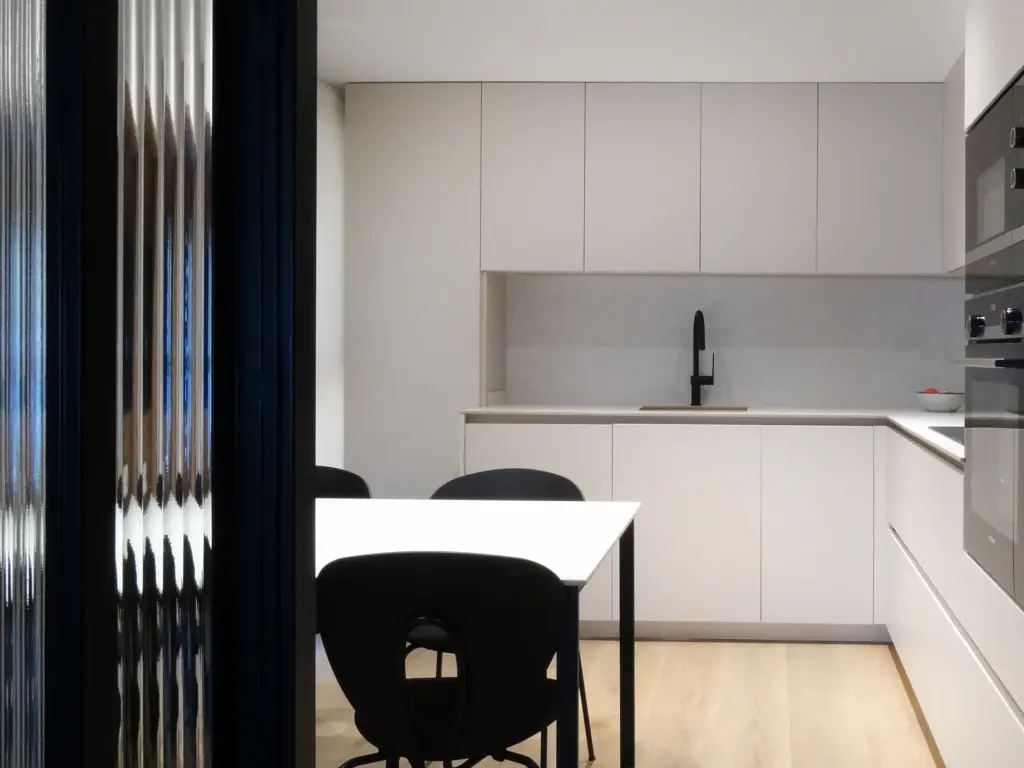
180 Grados´s kitchen
- Off-white.
- Beige.
- Sand.
- Off-white.
- Taupe.
- Soft browns.
These shades pair perfectly with natural wood and help create warm, inviting spaces without feeling overly busy or cluttered.
Interestingly, this pursuit of naturalness also connects with certain characteristics of Mediterranean kitchens, where light, high-quality materials, and warm tones play a leading role.
To introduce contrast, you can incorporate subtle touches of black, anthracite, or olive green, always in moderation and while maintaining the overall visual balance of the space.
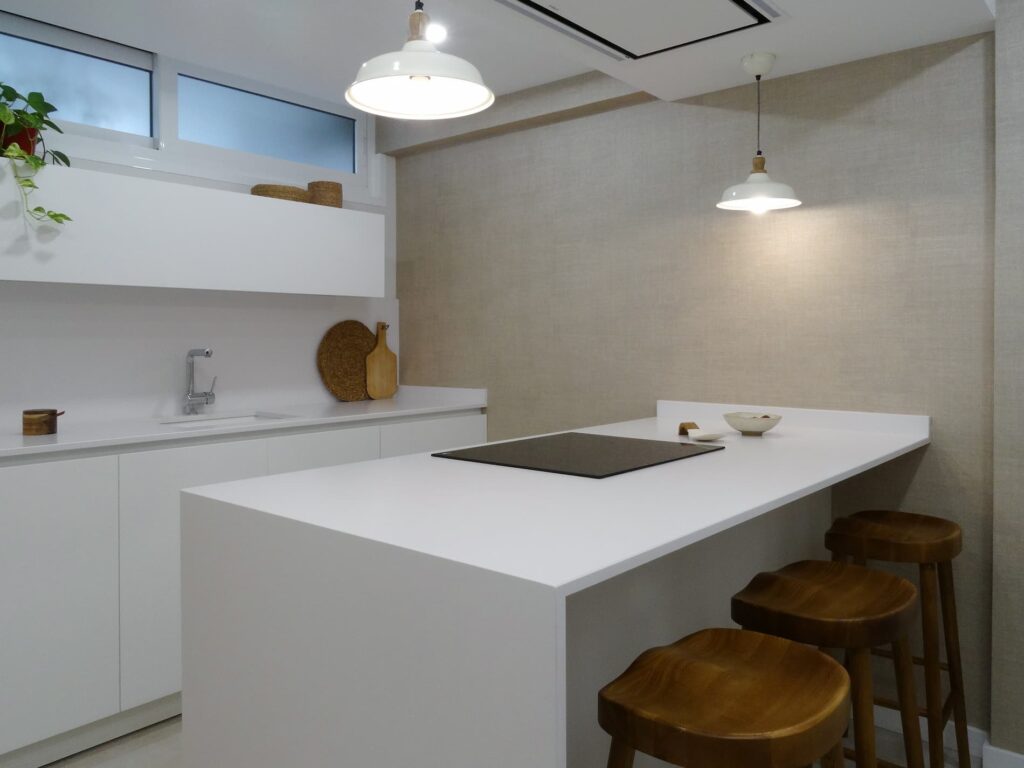
180 Grados´s kitchen
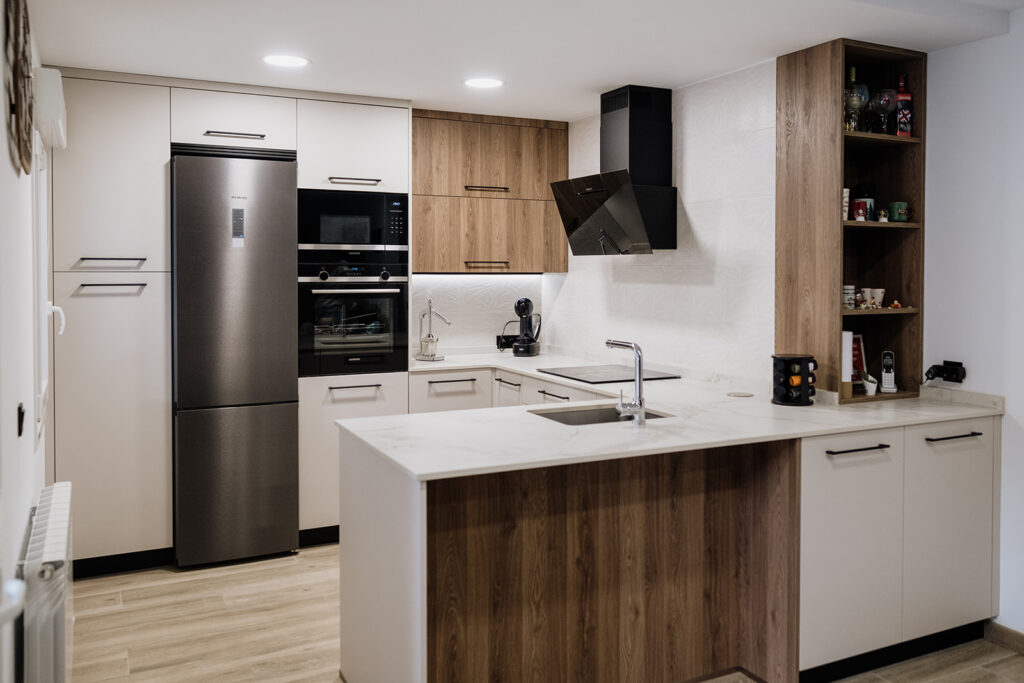
Roshe´s Kitchen
HOW TO PREVENT A JAPANDI KITCHEN FROM FEELING COLD OR IMPERSONAL
One of the most common mistakes when interpreting this style is confusing minimalism with a lack of personality.
A Japandi kitchen should never feel cold or overly neutral. Quite the opposite! Warmth is one of its defining characteristics. How can you achieve it?
- Incorporate a variety of natural textures.
- Play with lighting.
- Choose materials that age gracefully.
- Avoid spaces that feel too empty or sparse.
We recommend adding handcrafted ceramic pieces, a statement light fixture, or a thoughtfully integrated plant arrangement. Ultimately, the goal is to create a kitchen with visual interest—one that brings a sense of well-being, functionality, and balance every time you use it.
If you’re convinced that the Japandi style suits your way of living, the next step is to adapt this philosophy to your space, your needs, and your daily routine. Because it’s not just about choosing materials or colors—it’s about creating a kitchen that truly works for you.
At Delta, we can help you achieve exactly that. We design bespoke kitchens that combine aesthetics, comfort, functionality, and timeless style. Simply share your vision with us, and we’ll bring it to life. We look forward to hearing from you!